
The Stories That Changed Everything
How Two of my "Risky" Commissions Rewrote the Rules of British Television

I used to think "diverse storytelling" was just industry speak for checking boxes.
Then in 2017, I commissioned Chinese Burn and Perfect—two shows that would teach me the difference between representation and revolution.
When Unknown Becomes Unmissable
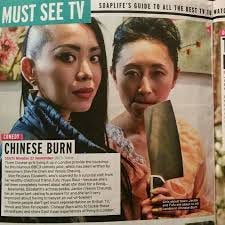
Neither project came with built-in audiences or household names attached. Chinese Burn was pitched by Yennis Cheung and Shin-Fei Chen, two Chinese women I'd never heard of who were exhausted by an industry that kept casting them as takeaway workers or silent background figures. Perfect came from Laurence Clark, a comedian with cerebral palsy who wanted to expose the bureaucratic absurdity disabled people face under Conservative benefit schemes.
These weren't safe bets. They were necessary ones.
As a Ghanaian-born, UK-raised woman working my way up through British broadcasting, I'd learned to recognize the particular frustration of talented people trapped in other people's narrow expectations. When Yennis and Shin-Fei walked me through their experiences with UK casting, the constant pressure to perform "ethnicity" for the camera, the soul-crushing repetition of stereotypical roles—I heard something I knew how to sell: marketable truth wrapped in urgent comedy.
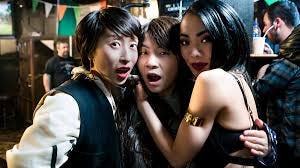
Chinese Burn became history-making television: the first all-Chinese female sitcom on British screens. But more than that, it was slapstick comedy with teeth. These women weren't breaking stereotypes gently—they were demolishing them with wit and rage and the kind of authenticity that makes commissioners nervous and audiences lean forward.
The Blueprint That Changed an Industry
in 2022, Perfect did something even more radical behind the cameras. When Laurence pitched his Liverpool-set comedy about navigating disability benefits, I knew we were dealing with stories that deserved more than just good intentions. This became the first British pilot to employ an Access Coordinator for the entire shoot—not as an afterthought, but as integral production infrastructure.
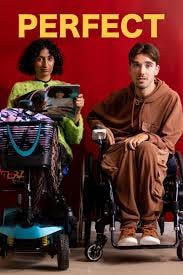
The result? A template that the TV Access Project now cites as best practice. Perfect didn't just put disabled performers on screen; it rewrote the rules about how we work with disabled cast and crew. Every accommodation, every adjusted workflow, every barrier we removed became a roadmap for productions that followed.
The show itself was brilliant, disabled actors delivering razor-sharp comedy about the absurd hoops they're forced to jump through in real life. But the legacy lives in production offices across the UK, where accessibility coordination is now standard practice instead of charitable afterthought.
The Real Victory
Here's what I learned from fighting for these shows: Neither Chinese Burn nor Perfect became ratings juggernauts. Neither spawned multi-season franchises. But they exist, and their existence changes everything.
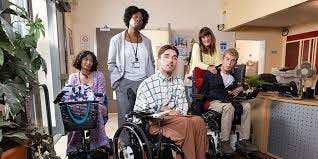
Every creative involved now has a calling card that matters. Yennis and Shin-Fei proved British-Chinese women could carry comedy that was authentically theirs. Laurence demonstrated that disability stories could be funny, sharp, and commercially viable when told by disabled voices. The crews learned that accessibility improvements often benefit everyone, not just the people who need them most.
Most importantly, both shows stand as proof of what happens when commissioners from underrepresented backgrounds get decision-making power. We look around the room, notice who's missing from our screens, and ask the uncomfortable question: "What do we risk by staying silent?"
The Stories Still Waiting
The truth about breaking barriers in television is that it's not about being the perfect ally or having all the right politics. It's about recognising urgency when you hear it and being willing to fight upstream for stories that matter more than they're "safe."
I'm a commissioner who proudly wears a development hat and I know how to spot authenticity and package it for people who control budgets.
I understand which battles are worth fighting and how to frame "risky" content as essential content. Most crucially, I know that the most marketable stories often come from voices that haven't been heard yet, not because they lack talent, but because they haven't had access to the rooms where decisions get made.
Chinese Burn and Perfect weren't just shows I commissioned. They were proof of concept for a different way of thinking about British television—one where representation isn't about charity, but about reflecting the complex, funny, frustrating reality of who actually lives in this country.
The access coordination protocols from Perfect are now industry standard. The confidence Chinese Burn gave to British-Asian performers ripples through casting rooms today. The writers I championed are developing new projects with bigger budgets and more creative control.
But here's what keeps me up at night: How many stories are we still missing? How many voices are waiting for someone with commissioning power to recognise their urgency?
With anti-immigrant sentiment rising across the UK right now, authentic representation on our screens isn't just nice to have. It's urgent.
When people see complex, funny, fully realised characters who happen to be immigrants, disabled, or from underrepresented communities, it's harder to reduce them to political talking points.
Television shapes how we see each other and that's not responsibility I take lightly.
The medium has the power to appeal to our better angels, but only if we're brave enough to use it responsibly.
What story have you been waiting to see on screen?
What part of your experience feels too important to keep waiting for someone else to tell?
And most importantly, how long are you willing to stay patient when you could be fighting to make it happen instead?
This October, I’m hosting a series of intimate evenings called The Script Advantage Network - for creators ready to turn their untold stories into unmissable television.
Because the industry needs your voice, it just doesn't know it yet.